 Kakobuy Spreadsheet
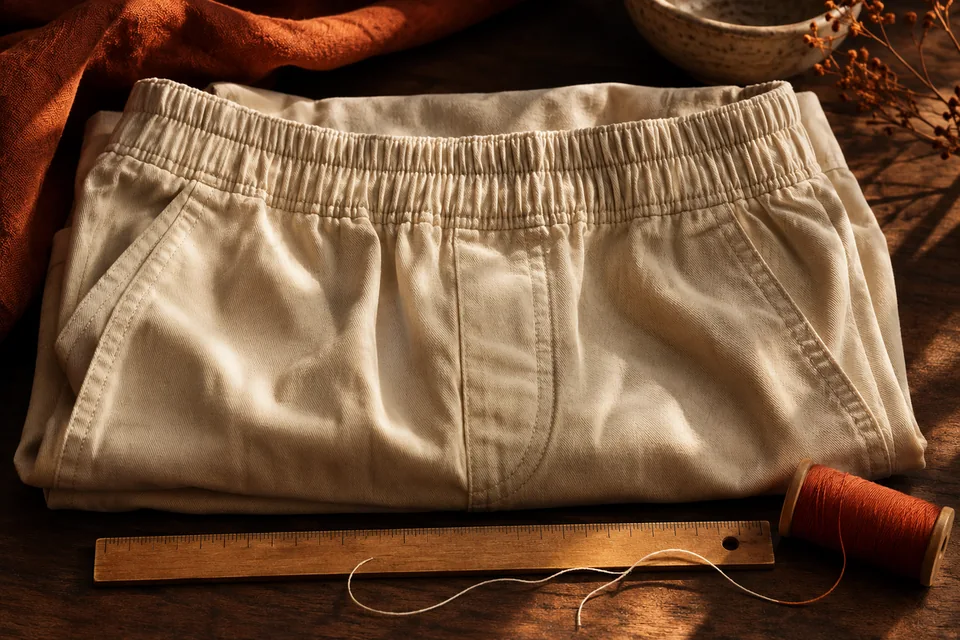
Build a reference from trousers you wear
Close the usual fastening and lay the elastic-waist trousers flat on a table. Arrange the waistband without pulling the gathers out. Measure straight across and record it as a flat, resting width. Note whether the elastic runs through the whole waistband or only the back. A fixed front can make two pairs of the same resting width feel different in use.
Choose a pair you have worn while sitting for the kind of time you expect. A pair you can stand in for a moment gives you limited information for a long desk day. Write where the waistband sits on your body alongside the flat number.
Separate a comfortable extension from a maximum
On your own reference pair, draw the ends apart gently and stop at a comfortable range that you already know from wear. Keep the force subjective in your notes. For an example record, the garment is 36 cm across at rest and 39 cm at gentle extension. After release and one minute on the table, it reads 36.5 cm.
The three readings explain what the first number leaves open. The 39 cm figure is a garment width under your light pull. The difference after release is an observation from this one test. A listing that gives a maximum stretch uses a different endpoint and may use much more force.
Turn the reference into a question about the selected size
For the candidate in your Kakobuy Spreadsheet, copy any resting width, whether the waist has a fixed panel, and how the seller describes the other number. If it gives ‘36–48 cm’, ask whether both readings are flat across the garment, whether 48 cm is the maximum and whether they apply to the selected size.
If the seller can only confirm the resting reading, compare it with the reference and leave extension and comfort open. Save a photo of the waistband layout if available. A matched width and a similar elastic layout give you clearer evidence than two unlabeled values.